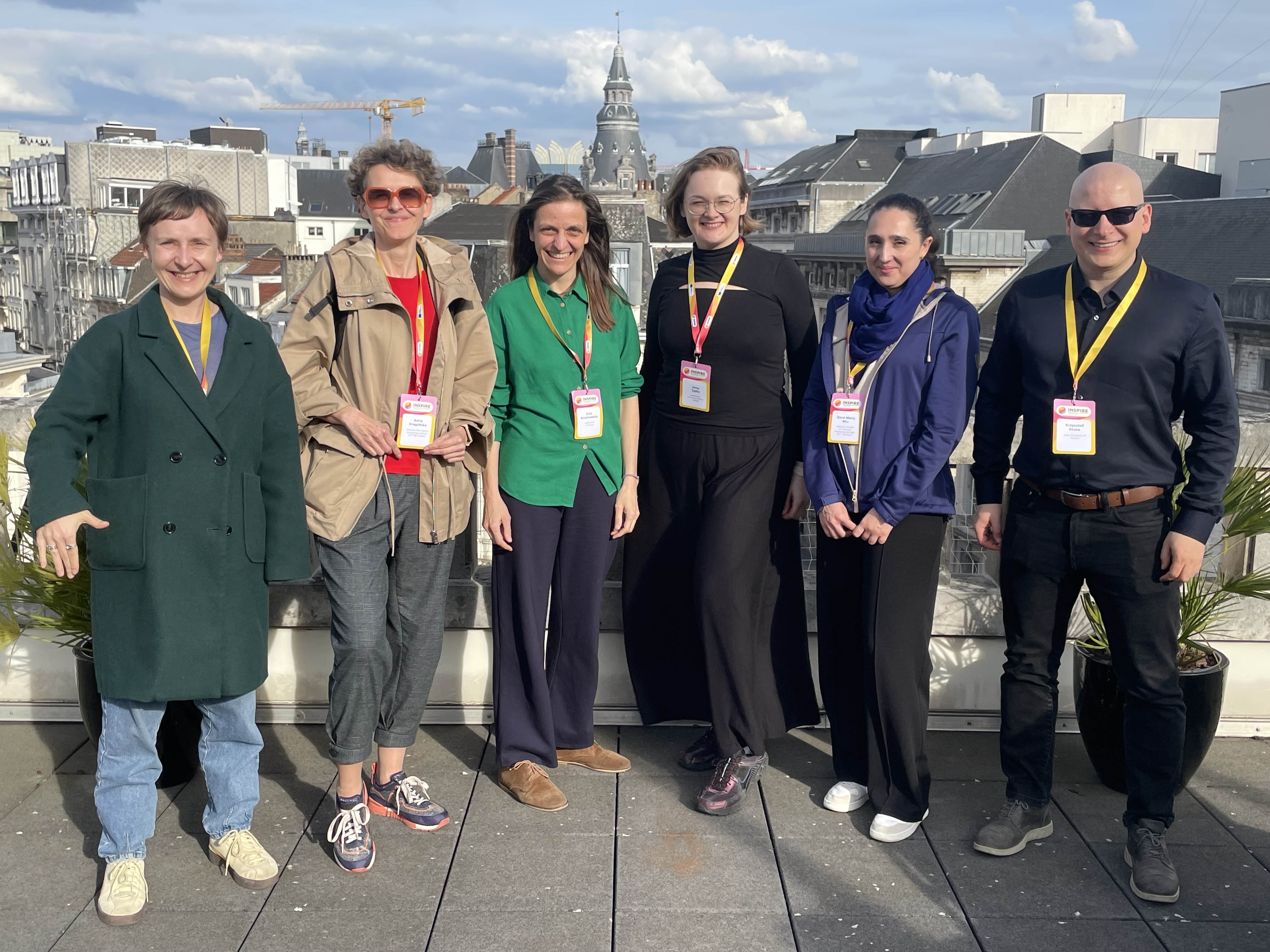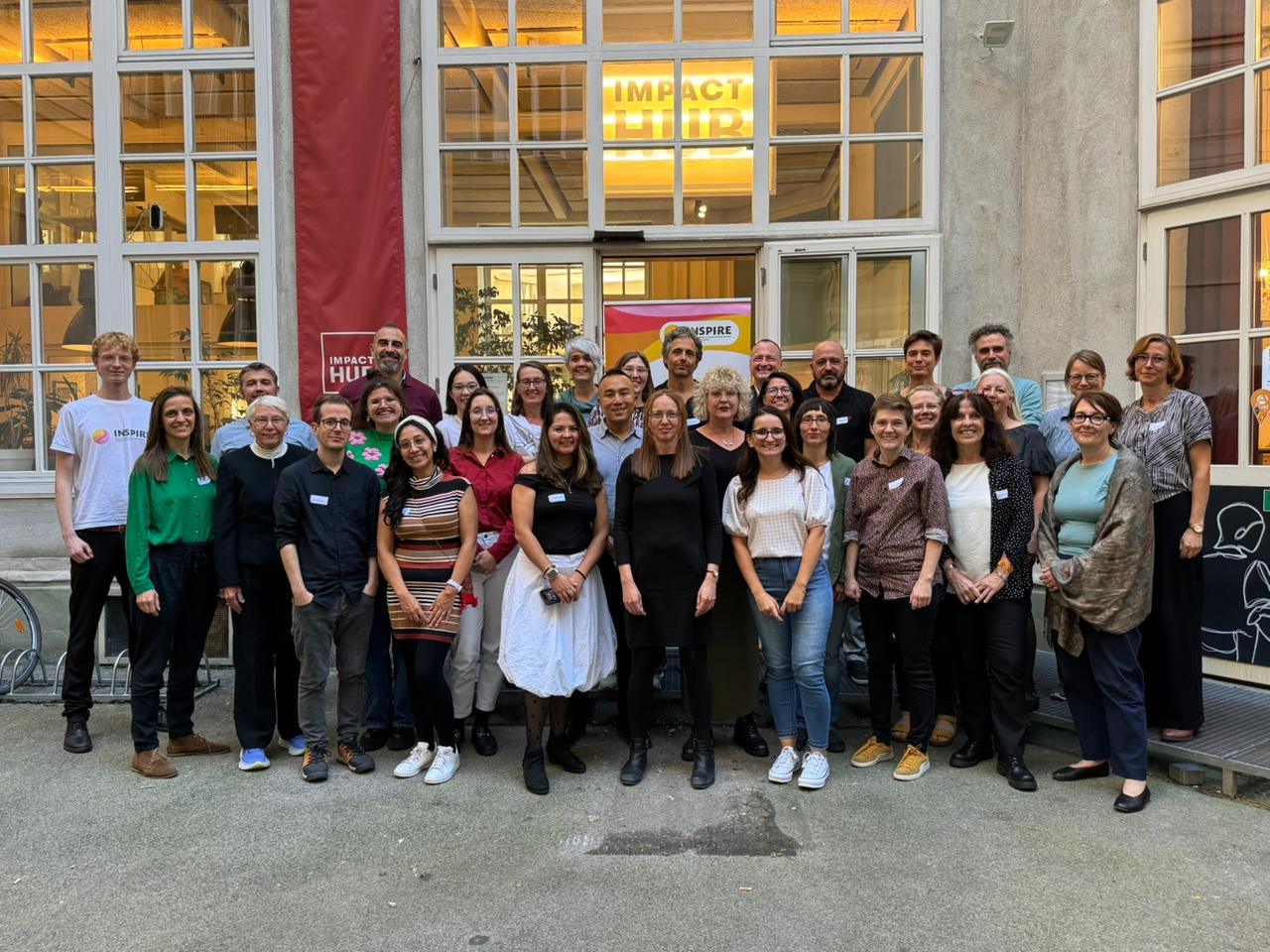
This past autumn, the INSPIRE team gathered in Vienna at the invitation of our partners at JOANNEUM RESEARCH for almost 4 days filled with thoughtful conversations, constructive debates, moments of reflection and plans for the future, but also valuable connections, shared joy(s), and the obligatory Schnitzel. 😊
It had been more than a year since our previous General Assembly meeting (where not only the consortium, but also members of the Advisory Board were invited) in Ljubljana and we were restless to take the conversation offline, share our progress with each other, find common solutions to challenges, and plan for the work ahead of us. Our goal? To maximise the project’s impact and create positive change across research and academic institutions.
The evening prior to the General Assembly meeting, we took part in a guided feminist tour of the Austrian capital, and we became familiar with the remarkable women that shaped the city for the past centuries, but also learned about the struggles they faced in carving their path in society. And this was just the beginning!
The next two days, 25 and 26 September, were dedicated to internal project discussions. We had a critical look at everything that we had achieved up to that point (considering deliverables, milestones, and the highs and lows that each task entailed), and we made sure to tie the remaining knots. As such, we focused our attention on:
- Presenting the findings of our case studies to our colleagues, which will form the evidence base for driving institutional change
- Devising a strategy for our Unplugged Dialogues, a series of interviews we are conducting with esteemed guests, who are experts on different areas of the equality work (the first two are up on our YouTube channel – you can check them out here)
- Sharing insights from each Knowledge & Support Hub’s experience of forming and working with their respective Communities of Practice
- Exploring our creativity with a drawing exercise aimed to help us visualise the future of INSPIRE and discover the points of convergence
- Deciding on the timeline and brainstorming different approaches for our remaining eight Open Training Units (the first two which you can find here)
- Assessing the status of our KPIs and outlining future opportunities for the dissemination of results
- Discussing a preliminary plan for the sustainability of the Centre of Excellence, beyond the project’s lifetime
And if you’re thinking those were many topics to talk about, that’s only because our team has so much energy and drive it’s hard to keep up with us! And this momentum was further carried on during the Knowledge Exchange Event on 27 September, which we will discuss in our upcoming article.
Our gratitude goes out to Sybille, Sarah, Florian and David for the flawless organisation and extra-guidance on the streets of Vienna.